- PCD Tools For Wood
- Replaceable Insert Router Bits
- CNC End Mill
- Cutter Head
- Woodworking Tools
- Industries Knives
- Carbide Burr
- Carbide Rotary Burr
- Tungsten Carbide Burr Bits
- Tungsten Carbide Burr Set
- Cylindrical Carbide Burr
- Long Shank Carbide Burr
- Double Cut Carbide Burr
- Flame Carbide Burr
- Cone Carbide Burr
- Burr Blanks
- Carbide Rods
- Tire Reamer Bit
- Tungsten Carbide End Mill
- Carbide Tire Studs
- Snow Tire Studs
- ATV Tire Studs
- Motorcycle Tire Studs
- Mining & Oiling


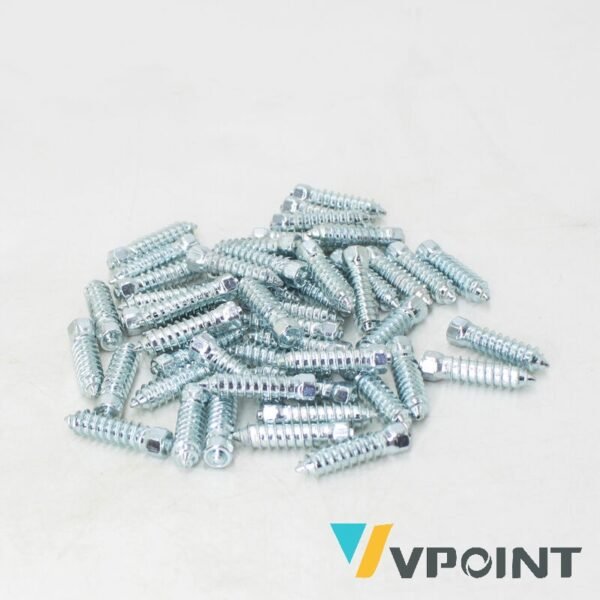

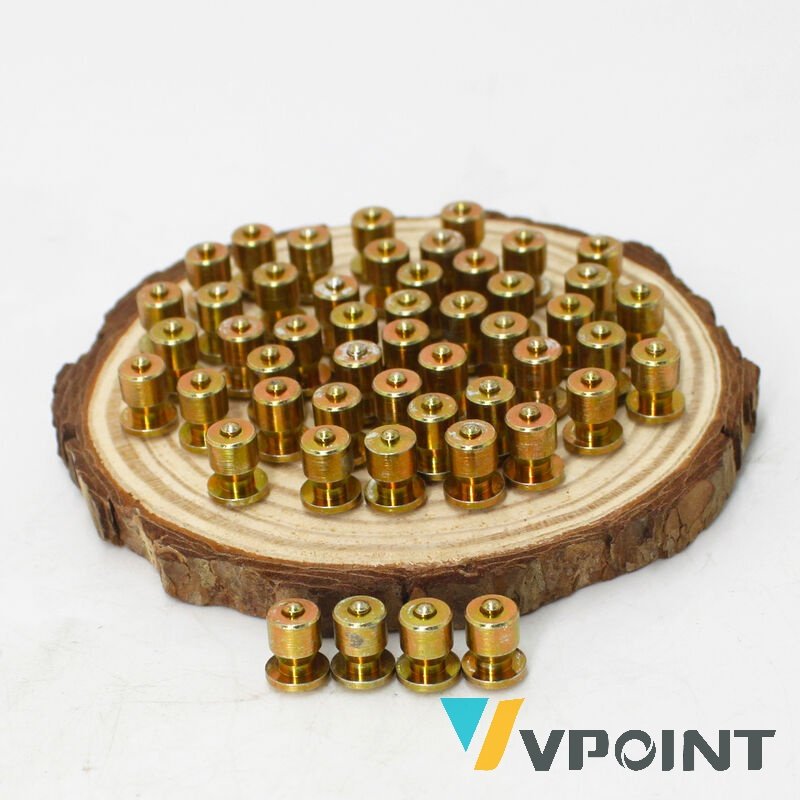
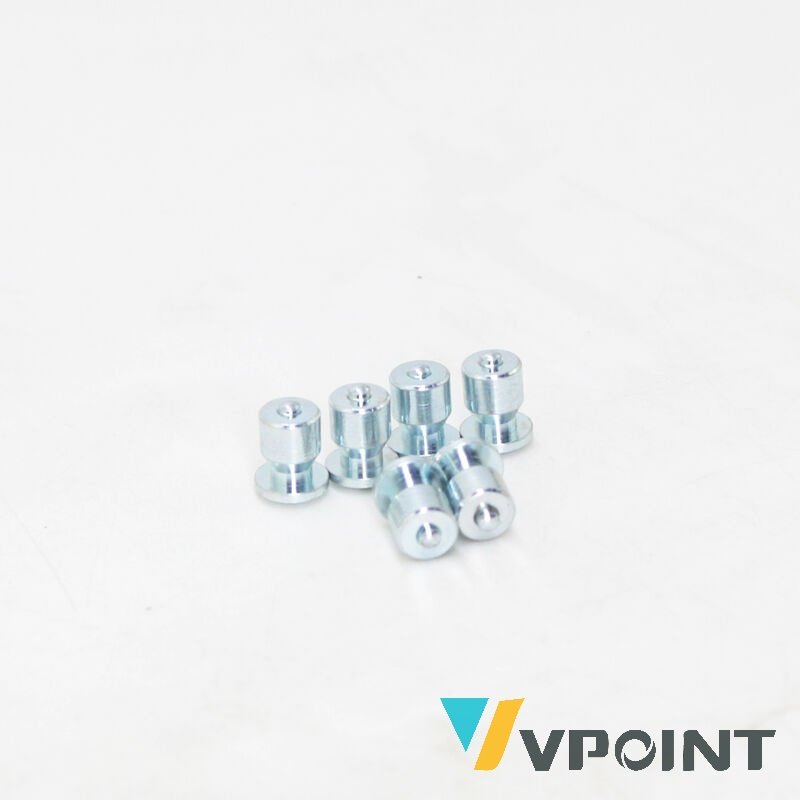
Design and Construction
A tungsten carbide tyre stud with a cylindrical neck between the carbide pin and the seating flange. The neck and flange form the mechanical retention feature in the rubber; the carbide pin above it does the cutting on ice.
How It Works
Pull-out happens when the rubber around the neck is loaded beyond its grip. A cylindrical neck spreads that load evenly; a stepped or flanged profile adds a mechanical shoulder. Retention is therefore a body-design problem, separate from pin hardness.
Applications
High-load winter tyres, heavy vehicles, studded tyres on rough roads, fleet winter conversion.
Field Cases
- Fleet: cylindrical-neck studs held through a full season on rough routes.
- Heavy vehicle: retention stayed consistent under higher axle loads.
- Retread shop: hole sizing to the neck stopped the early losses seen with a loose fit.
Performance Data
| Metric | Value / Observation |
|---|---|
| Body | Cylindrical neck + seating flange |
| Core | Tungsten carbide pin |
| Retention | Mechanical grip in the rubber |
| Failure mode addressed | Pull-out |
Suitable Materials
Winter car and light commercial tyres, retread casings suitable for studding.
Material Comparison: Neck Geometry: Cylindrical vs Stepped vs Flanged
How the body holds the stud in the tread. Typical industry analysis:
| Factor | Cylindrical Neck (this stud) | Stepped Neck | Wide Flange |
|---|---|---|---|
| Load distribution in rubber | Even | Concentrated at step | Spread under flange |
| Mechanical shoulder | None | Present | Strongest |
| Pull-out resistance | Good | Better | Best |
| Rubber stress at the hole | Low | Moderate at step | Low, wider area |
| Hole sizing sensitivity | Moderate | High | Moderate |
| Best use | General winter tyre | Rough roads | Heavy / high-load tyres |
Delivery Scope
Bulk studs; neck diameter, overall length and quantity confirmed with the order.
Why Choose VPOINT
Retention is engineered into the body and stated separately from pin hardness.
Precision & Quality Control
Neck diameter, flange concentricity and carbide seating checked per lot with ISO 9001 batch traceability.
Specifications
Published specification:
| Item | Specification |
|---|---|
| Type | Cylindrical neck carbide stud |
| Body | Neck + seating flange |
| Core | Tungsten carbide pin |
| Duty | High retention |
| Supply | Bulk |
| Inspection | Per-lot neck and flange check |
Frequently Asked Questions
What causes stud pull-out?
Rubber around the neck being loaded beyond its grip, often made worse by a loose hole fit.
Why a cylindrical neck?
It distributes retention load evenly around the hole.
Is a flange better?
A wide flange adds the strongest mechanical shoulder for high-load tyres.
Does hole sizing matter?
Yes – size the hole to the neck diameter for consistent retention.
What is inspected?
Neck diameter, flange concentricity and carbide seating per lot.
Related Search Terms
cylindrical neck tire stud, pull out resistance stud, carbide stud retention, flanged tire stud, stepped neck stud, high load winter stud, heavy vehicle tire studs, rubber grip stud body, stud hole sizing, retread carbide studs, mechanical retention stud, anti pull out pins, neck diameter stud, fleet winter studs, carbide pin seated body