
- PCD Tools For Wood
- Replaceable Insert Router Bits
- CNC End Mill
- Cutter Head
- Woodworking Tools
- Industries Knives
- Carbide Burr
- Carbide Rotary Burr
- Tungsten Carbide Burr Bits
- Tungsten Carbide Burr Set
- Cylindrical Carbide Burr
- Long Shank Carbide Burr
- Double Cut Carbide Burr
- Flame Carbide Burr
- Cone Carbide Burr
- Burr Blanks
- Carbide Rods
- Tire Reamer Bit
- Tungsten Carbide End Mill
- Carbide Tire Studs
- Snow Tire Studs
- ATV Tire Studs
- Motorcycle Tire Studs
- Mining & Oiling
Aluminum Cutting Saw Blade For Door and Window

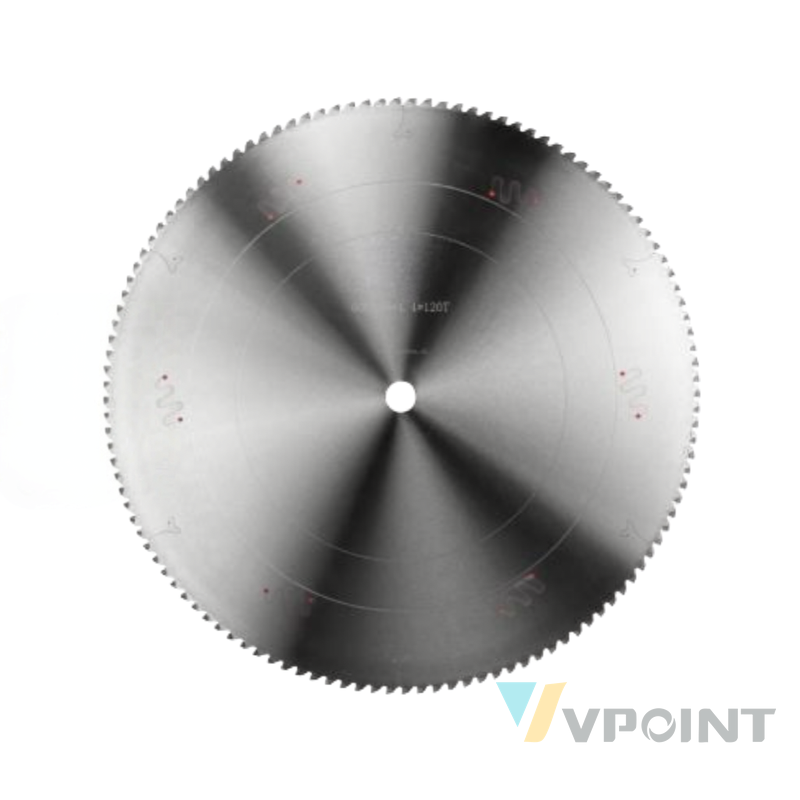
Design and Construction — a VPOINT woodworking cutting tool for panel sizing and crosscut work, sized for chipboard / particleboard and similar workpieces. The specification table below lists dimensions; the performance table gives standard reference values to start with, and the FAQ covers selection and service. ISO 9001 production, batch-verified, custom sizes from drawings.
Special saw blades for aluminum materials used in doors, windows, and curtain walls are designed for precise, smooth, and lightweight cutting. They are ideal for right-angle cuts, corner cuts, and coated parts. Typically featuring trapezoidal flat teeth or flat teeth, these blades excel in cutting thin sheets and are especially suited for the hollow structures of door and window products.
Aluminum Cutting Saw Blade used in doors, windows and curtain walls aremainly designed for the sawing operations in the processing of doors and windows.These sawblades possess such characteristics as high precision, small amplitude, smoothness and lightness.They can be used for cutting at right angles, corner cutting and cutting cutting coated parts.According to different processing techniques, two types, namely trapezoidal flat teeth and flatteeth, are often adopted.This kind of saw blade is particularly excellent for cutting thin sheets.Its design feature of small amplitude is especially suitable for the hollow structures of door and
window products.
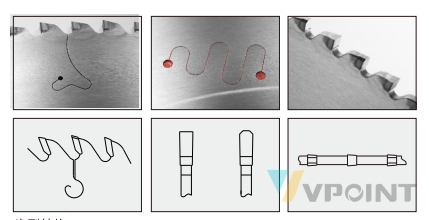
Tooth Structure
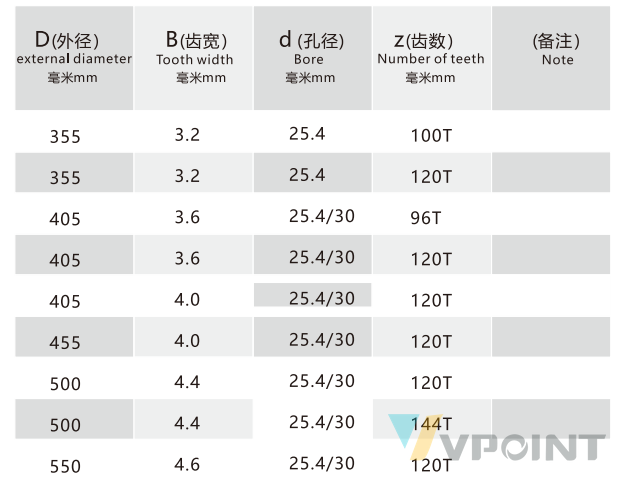
Size:
Application
Machines:Digital Display Double-head cutting Saw
Material:Industrial aluminum profiles
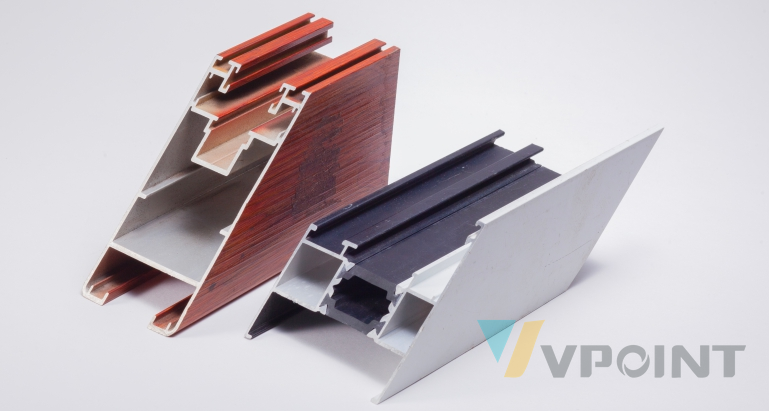
Saw blades for cutting aluminum alloy windows and doors are designed for precision, smoothness, and efficiency. They often feature trapezoidal flat teeth or flat teeth, making them ideal for cutting thin sheets, hollow structures, and coated materials. These blades excel in straight, angled, and corner cuts, ensuring high-quality results for aluminum profiles.
Design and Construction
The aluminum cutting saw blade for door and window production carries carbide teeth ground for non-ferrous alloys. Blades are produced to order: diameter, kerf, bore and tooth count are matched to the aluminum cutting machine when ordering.
How It Works
Aluminum alloys weld to a tooth that grabs instead of shears: the negative-rake carbide geometry used here pushes chips down and away instead of dragging them, so the alloy does not build up on the edge. Finer tooth counts than woodworking blades leave a clean exit on extrusion and profile.
Applications
- Aluminum profile cutting
- Door and window frame production
- Extrusion cutting
- Non-ferrous profile fabrication
Suitable Materials
- Aluminum alloys and profiles
- Door and window extrusion
- Aluminum composite profiles
- Non-ferrous metals
The negative-rake carbide geometry prevents built-up edge when cutting aluminum alloys.
Material Comparison: Tungsten Carbide vs. PCD
The figures below are typical industry data. Carbide is the standard tip material for these blades; PCD wins on very high-volume abrasive work. The comparison shows where each material wins so you can match the blade to the job.
| Property | Tungsten Carbide (This Tool) | PCD Diamond |
|---|---|---|
| Hardness | 1,500–2,000 HV | 7,000–9,000 HV |
| Tool life on MDF / particleboard / melamine | 30–60 h (baseline) | 15–20× longer (500–1,200 h) |
| Tool life on solid hardwood | 80–150 h (baseline) | 10–13× longer (800–2,000 h) |
| Edge renewal | 4–6 regrinds at shorter intervals | 5–8 regrinds, each removing only 0.2–0.3 mm of diamond |
| Surface finish | Ra ~0.8 μm typical, degrades as the edge wears | Ra ≤ 0.2 μm achievable, stable over the tool life |
| Thermal conductivity | ~80 W/m·K | 540–560 W/m·K — heat leaves the edge fast |
| Friction coefficient | ≈ 0.3 | ≈ 0.05 — lower cutting forces |
| Fracture toughness | Higher — tolerates interrupted cuts and impacts better | Lower — needs stable, vibration-free setups |
| Suited for | General-purpose CNC routing in wood, panels, acrylic; the economic standard | Very high-volume abrasive panel work; non-ferrous metals |
Figures are typical published values; actual tool life depends on the workpiece material, feed rate, speed, machine condition and maintenance schedule.
Delivery Scope
Blades are made to order. Send the machine model, or the old blade with its diameter, kerf, bore and tooth count, and our engineering team will quote the exact specification.
Why Choose VPOINT
- One-year warranty on every cutter — defects in material or workmanship are covered for 12 months from delivery.
- Custom tooling — diameters, shanks, cutting lengths and flute configurations built to your drawing or sample.
- Non-standard fabrication — sizes outside the standard catalogue, including special geometries.
- Resharpening service — cutters return to service after regrinding at a fraction of new-tool cost.
- Factory-direct since 2008 — ISO 9001 manufacturing in Sichuan and Dongguan, China; no trading intermediaries.
Send a drawing, a sample or a worn tool, and our engineering team will quote the exact specification you need.
Precision & Quality Control
Every cutter is inspected before shipment. Shank diameter, cutting-edge diameter, cutting length and overall length are measured against the values listed in the specifications table, and cutting edge runout is verified on the assembled tool.
Tools measuring outside tolerance do not ship. Inspection is performed under our ISO 9001 quality system, with batch records retained for traceability.
Key words: aluminum cutting saw blade, door window saw blade, aluminum profile blade, non-ferrous saw blade, saw blade, panel saw blade, scoring saw blade, circular saw blade, carbide saw tips, TCT saw blade, reversible knives, rota-tip bit, constant cutting diameter, rotate insert 90 degrees, double the cutting life, on-machine knife change, ER collet, 1/2-inch shank insert bit, furniture manufacturing, furniture factory, cabinet making, panel furniture, kitchen cabinet production, woodworking machinery, CNC router, woodworking cutting tools, acrylic sheet, solid wood, particleboard, chipboard, plywood, rubber sheet, rubber board, hardwood, softwood, MDF, HDF, melamine board, flycutter, planing bit, surfacing bit, slab flattening bit, bottom cleaning bit, spoilboard leveller, rabbeting bit
Performance Data
Standard reference values for guidance only — always adjust to machine rigidity, clamping and tool wear, and confirm on the actual workpiece.
| Material | Typical spindle speed | Typical feed | Notes |
|---|---|---|---|
| chipboard / particleboard | 4,500–6,000 rpm | 10–18 m/min | TCT teeth resist abrasive glue |
| MDF / HDF | 5,000–6,500 rpm | 9–16 m/min | Smooth kerf, minimal fuzzing |
| melamine-faced panels | 4,500–5,500 rpm | 8–14 m/min | Score first to prevent face chipping |
| solid wood | 4,800–6,000 rpm | 10–15 m/min | Alternating grain demands sharp teeth |
Frequently Asked Questions
How do I choose the tooth count?
+More teeth give a cleaner edge on thin or faced panels; fewer teeth clear chips faster on thick stock.
What arbor speed suits this blade?
+Set by diameter and tooth count — larger diameters run slower; start near 4,500–6,000 rpm for panel work.
How often should the blade be serviced?
+At the first burn marks or heavy feed resistance; a sharpened tooth costs less than a rejected panel.
Sources & standards: ISO 9001 quality management · UNSPSC commodity codes · eClass product classification
Related Search Terms
PCD saw blade, diamond saw blade, panel sizing saw blade, PCD scoring blade, diamond tip circular saw, aluminum, cutting, blade, window

Reviews
There are no reviews yet.