- PCD Tools For Wood
- Replaceable Insert Router Bits
- CNC End Mill
- Cutter Head
- Woodworking Tools
- Industries Knives
- Carbide Burr
- Carbide Rotary Burr
- Tungsten Carbide Burr Bits
- Tungsten Carbide Burr Set
- Cylindrical Carbide Burr
- Long Shank Carbide Burr
- Double Cut Carbide Burr
- Flame Carbide Burr
- Cone Carbide Burr
- Burr Blanks
- Carbide Rods
- Tire Reamer Bit
- Tungsten Carbide End Mill
- Carbide Tire Studs
- Snow Tire Studs
- ATV Tire Studs
- Motorcycle Tire Studs
- Mining & Oiling
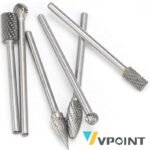
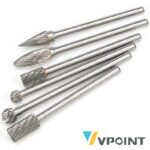
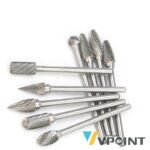
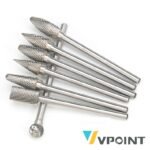
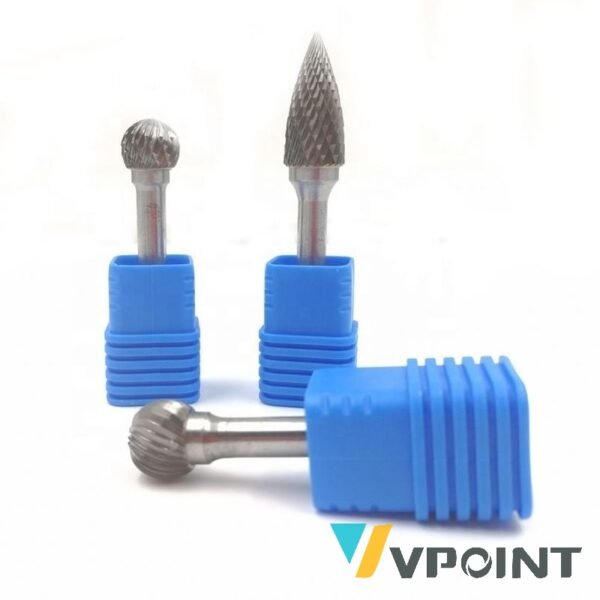

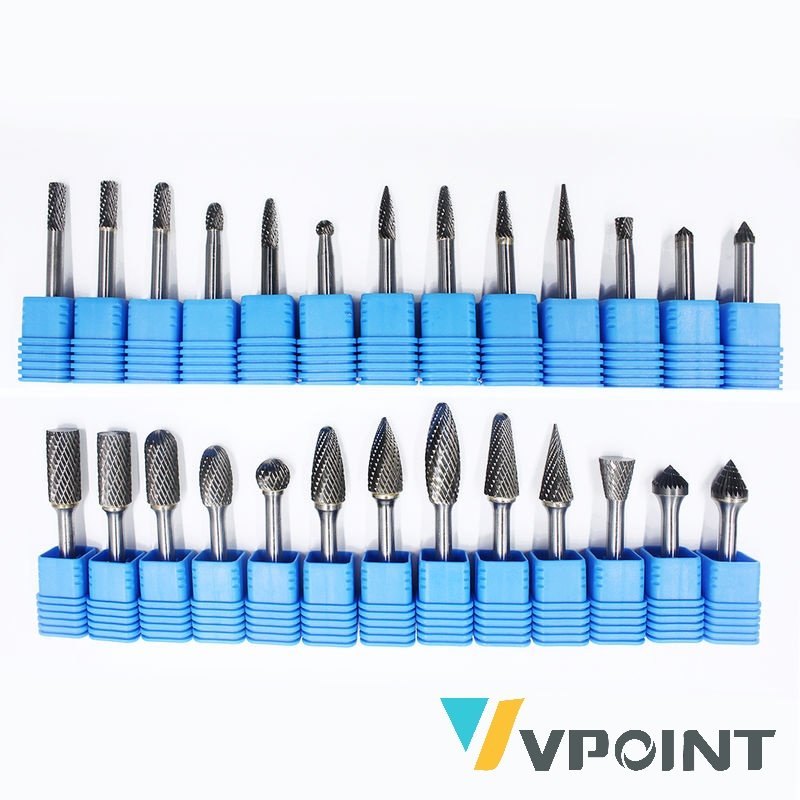
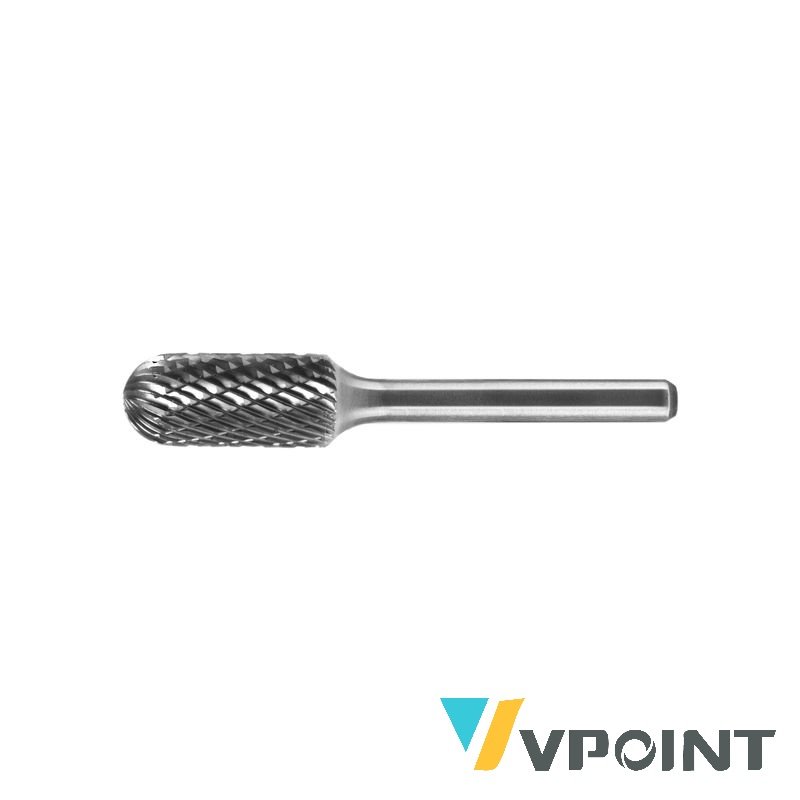
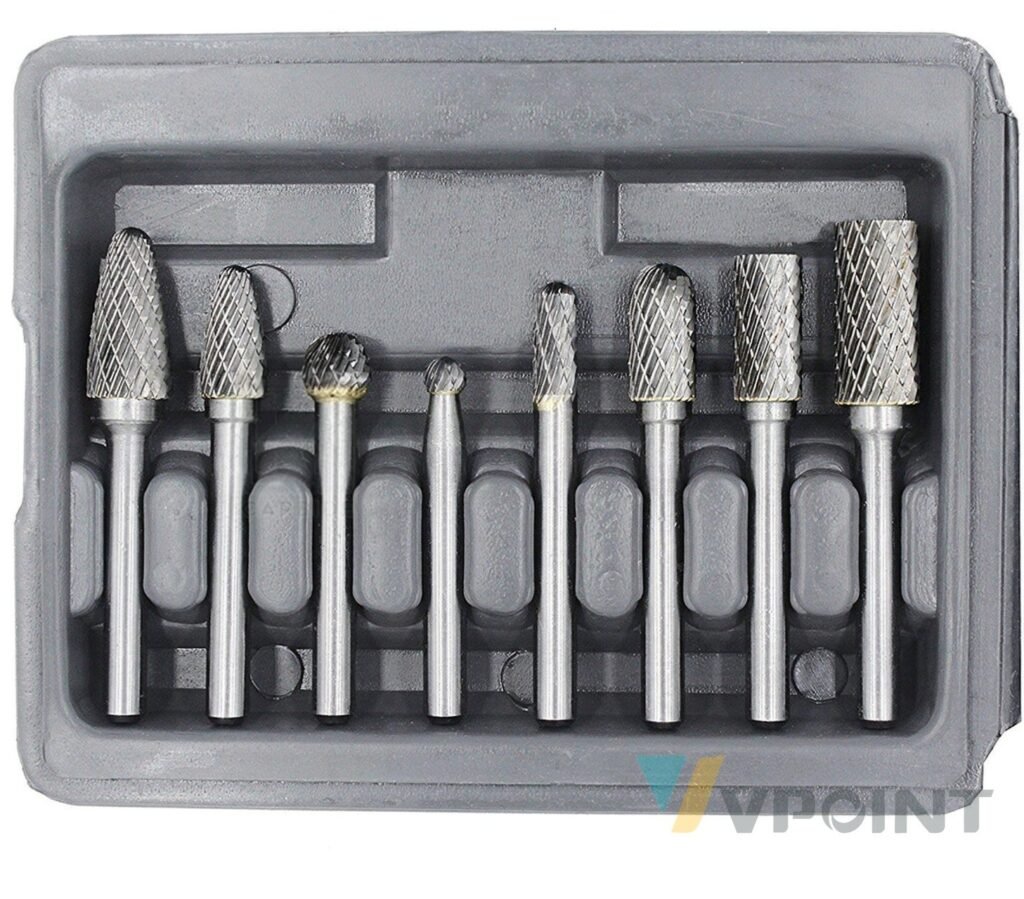
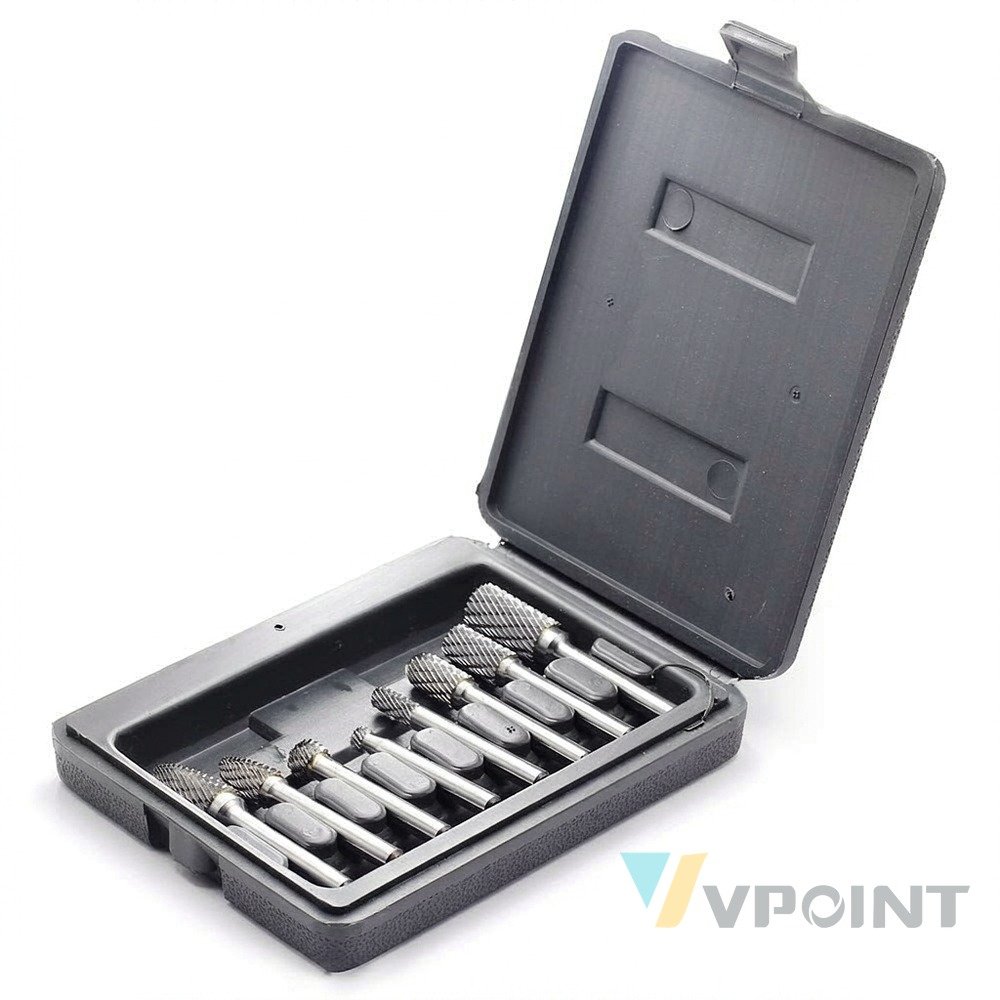
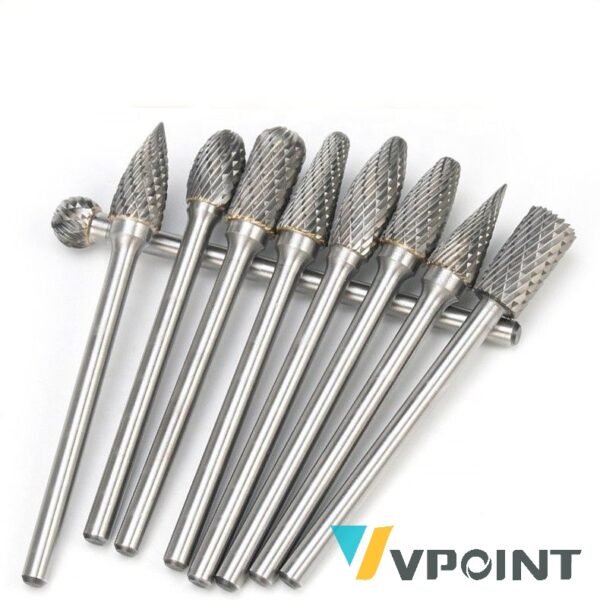
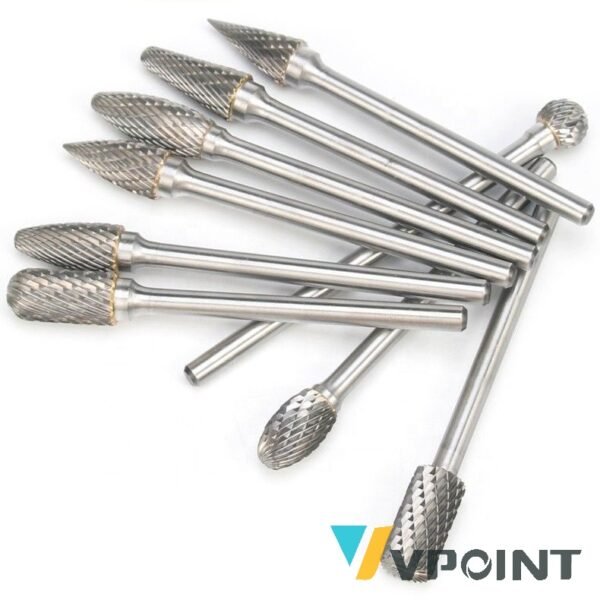
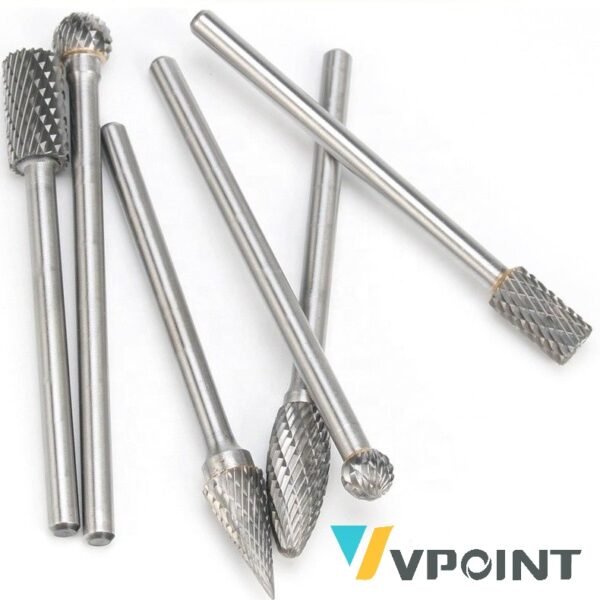
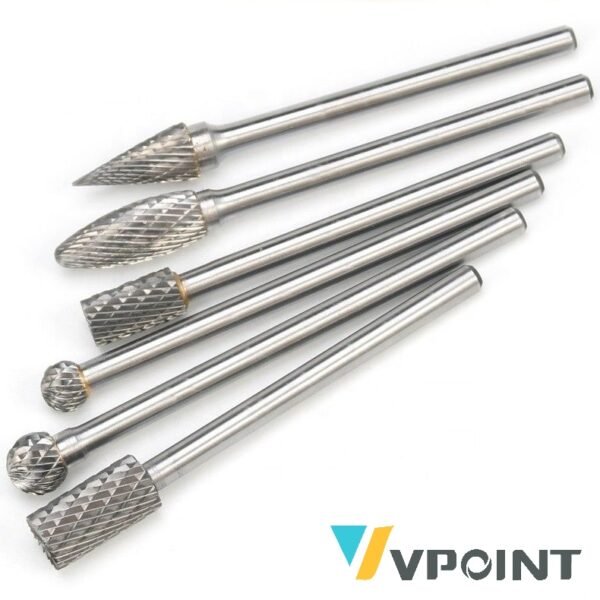
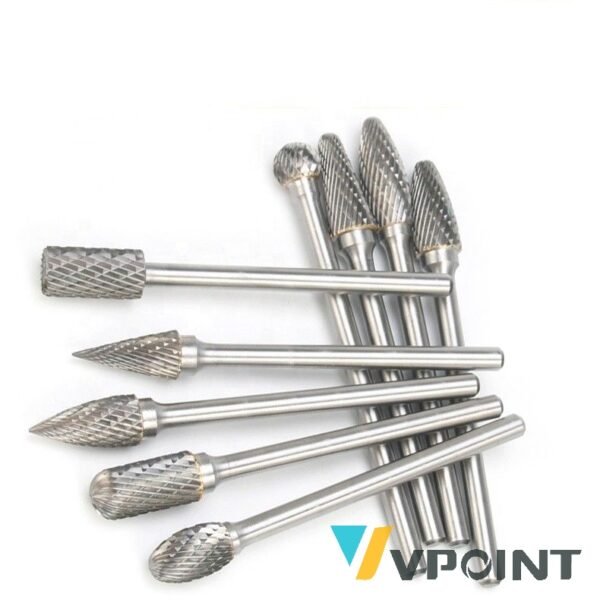
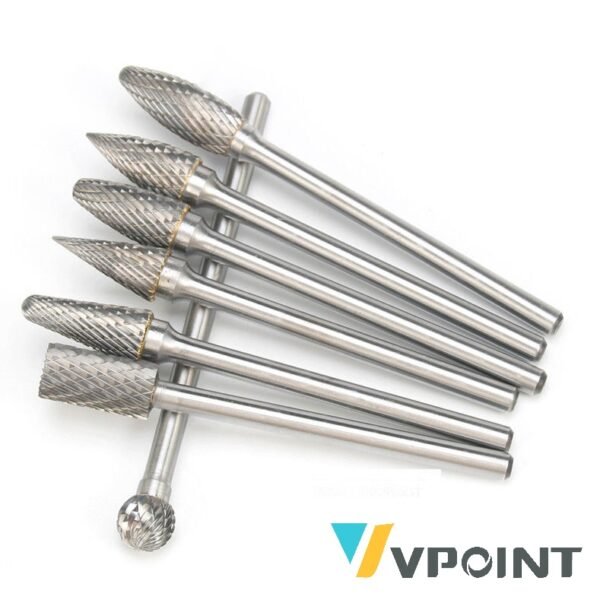
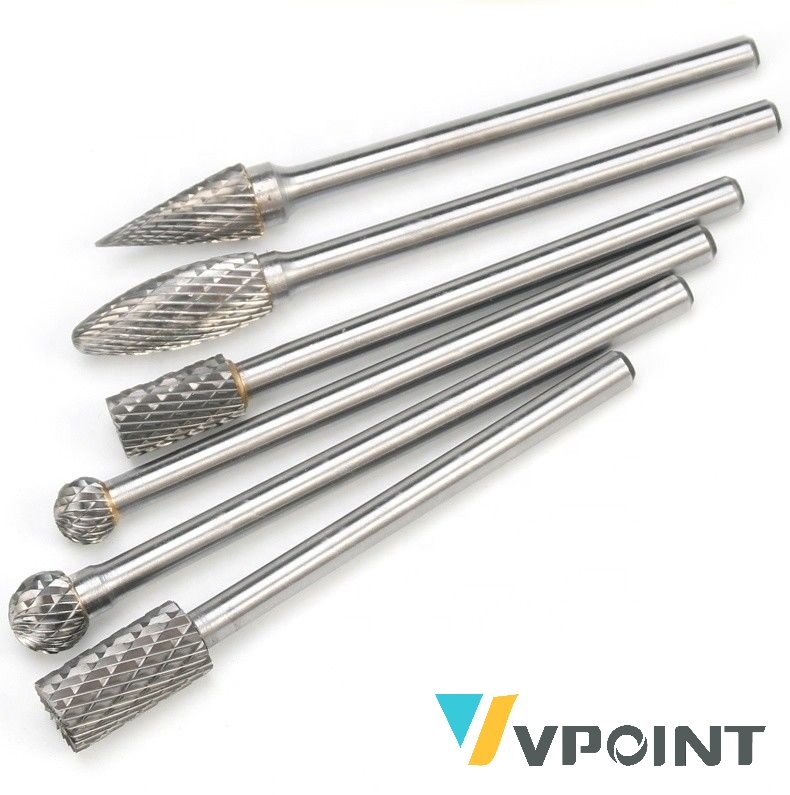
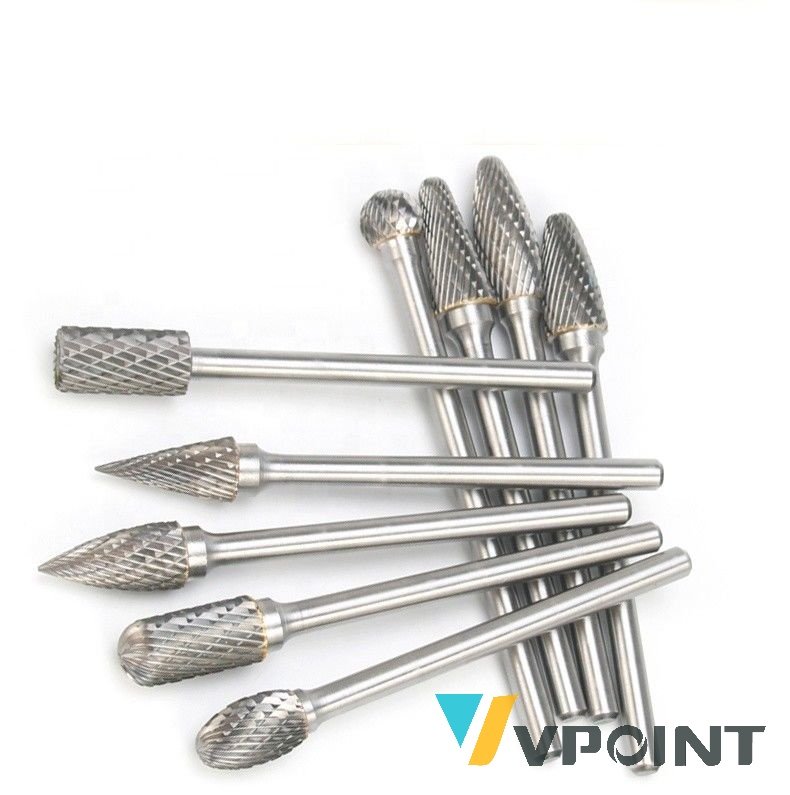
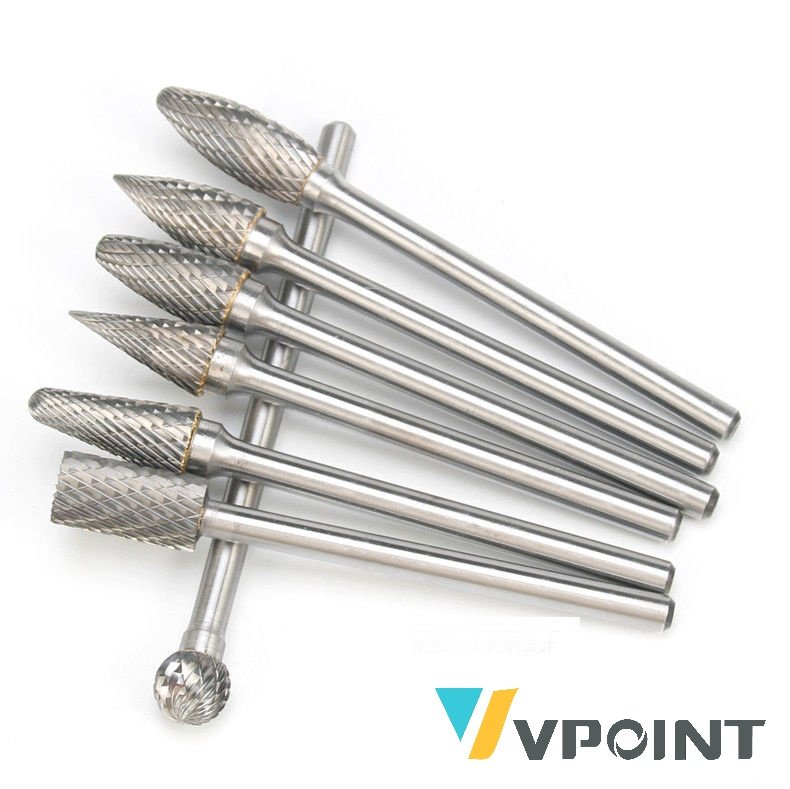
Design and Construction — a VPOINT long-shank carbide burr for deep cavities and reach work, sized for steel / stainless welds and similar work. YG8 carbide at HRA 89–91; die-grinder reference speeds are in the performance table below, with the flute-style guidance in the FAQ. ISO 9001 production, batch-verified, custom sizes from drawings.
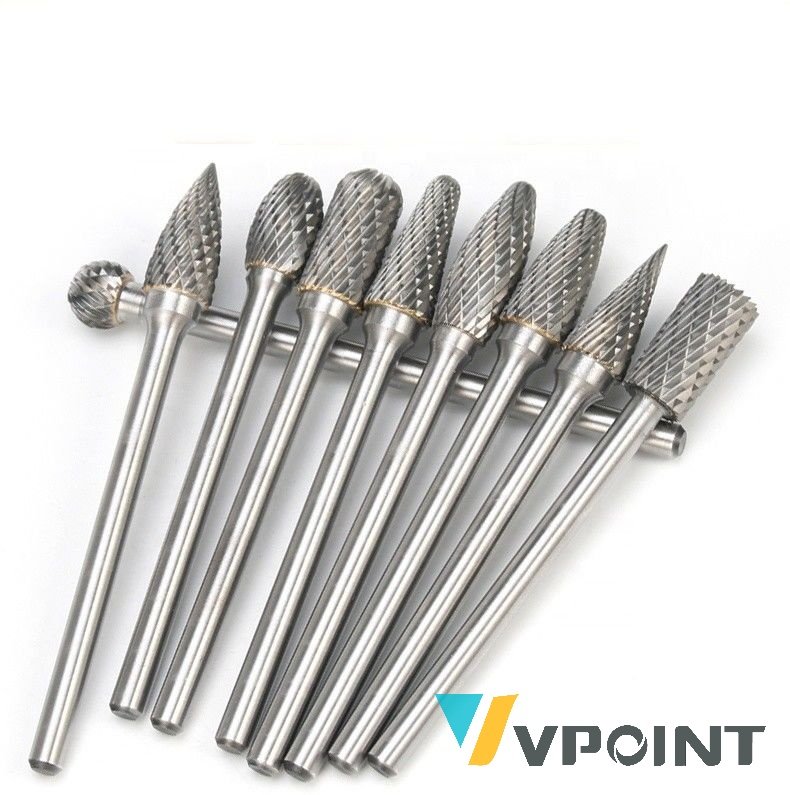
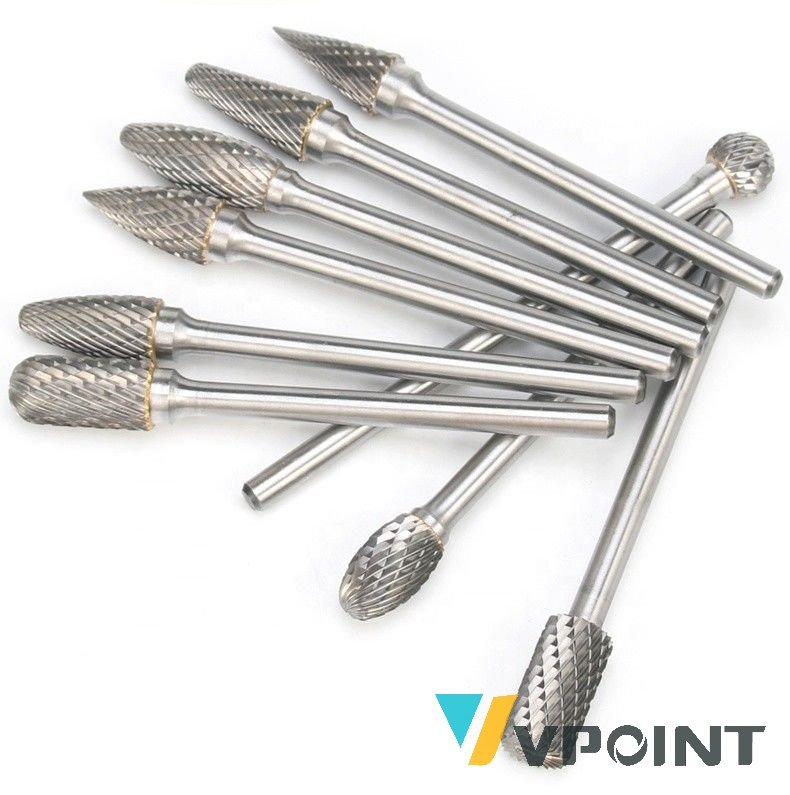
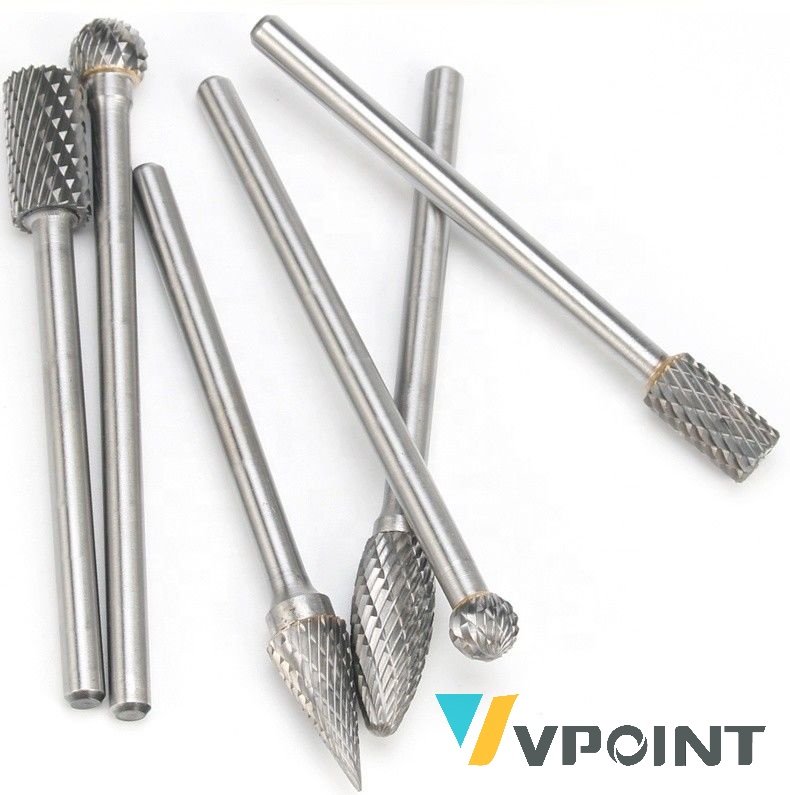
Design and Construction
A high-performance long-shank carbide burr with a controlled braze joint between the carbide head and the steel shank. Joint position, braze coverage and concentricity are treated as the primary quality variables on an extended tool.
How It Works
On a long tool the braze is the most heavily loaded part of the assembly: bending moment rises with reach, and a void in the braze concentrates stress. Uniform braze coverage and a concentric joint keep the load distributed through the head.
Applications
High-load extended reach work, production deburring, foundry cleanup, continuous-duty die grinder use.
Field Cases
- Foundry: consistent braze quality ended the premature head losses seen on a long-reach job.
- Production cell: extended tools completed a full shift at steady feed.
- Tool room: concentric joints stopped the visible wobble at the head.
Performance Data
| Metric | Value / Observation |
|---|---|
| Joint | Brazed carbide head / steel shank |
| Quality variables | Coverage, position, concentricity |
| Duty | High-load extended reach |
| Inspection | Per-lot joint check |
Suitable Materials
Cast iron, carbon and alloy steel, stainless steel and hardened tool steel.
Standard reference values for guidance only — always adjust to the workpiece material, the machine spindle speed and the feed, and confirm on the actual part.
Material Comparison: Braze Joint Quality: Full Coverage vs Voided vs Misaligned
How joint condition changes service life on a long tool. Typical industry failure analysis:
| Factor | Full Coverage / Concentric (this tool) | Voided Braze | Misaligned Joint |
|---|---|---|---|
| Stress distribution | Even | Concentrated at void | Uneven |
| Visible runout | Minimal | Minimal | Noticeable wobble |
| Fatigue life | Longest | Shortened | Shortened |
| Failure mode | Gradual wear | Sudden head loss | Vibration, edge chipping |
| Acceptable at full reach | Yes | No | No |
| Inspection method | Coverage + concentricity | Not detectable by eye alone | Runout measurement |
Delivery Scope
Single burr; head shape, shank diameter and reach confirmed with the order.
Why Choose VPOINT
The braze is the load path on an extended tool – it is specified and inspected, not assumed.
Precision & Quality Control
Braze coverage, joint position and concentricity inspected per lot at micron level with ISO 9001 batch traceability.
Specifications
Published specification:
| Item | Specification |
|---|---|
| Type | High performance long shank burr |
| Joint | Brazed carbide / steel |
| Inspected | Coverage, position, concentricity |
| Duty | High-load extended reach |
| Workpiece | Cast iron, steel, stainless, tool steel |
| Traceability | ISO 9001 per lot |
Frequently Asked Questions
How deep can the long-shank version reach?
100, 150, 200 and 300 mm reach classes — pick the shortest reach that gets you there, because reach amplifies any collet runout.
How do I keep it from chattering?
Seat the shank fully, use light pressure, and let the flutes clear — long tools punish heavy hands.
Same head codes as standard burrs?
Yes — SA–SM contours carry over, so a long-shank burr matches the shape you already run on short shanks.
Why is the braze so important on a long tool?
Bending moment rises with reach, so any void or misalignment in the joint concentrates stress.
What is inspected?
Braze coverage, joint position and concentricity per production lot.
What does a poor joint look like in use?
Visible wobble, chipping, or sudden loss of the carbide head.
Can it run continuously?
Yes – it is specified for high-load, continuous-duty extended reach work.
Which materials?
Cast iron, carbon and alloy steel, stainless and hardened tool steel.
Related Search Terms
brazed carbide burr, long shank braze joint, braze coverage inspection, carbide head steel shank, high performance long burr, concentric braze joint, head loss prevention, foundry long reach burr, braze fatigue life, extended burr joint quality, micron concentricity burr, production deburring long tool, controlled braze carbide, long shank runout, braze void failure
Key words: carbide rotary burr, rotary burr set, double cut carbide burr, aluminium cut burr, tire reamer bit, burr blanks, carbide burr 6mm shank, TiAlN coated burr, rotary file, carbide burr for steel, carbide burr for aluminum, reversible knives, rota-tip bit, constant cutting diameter, rotate insert 90 degrees, double the cutting life, on-machine knife change, ER collet, 1/2-inch shank insert bit, die grinder, metal deburring, weld seam removal, weld cleanup, weld bead blending, weld bevel prep, porting cylinder heads, engine port work, casting cleanup, mould and die work, mold polishing, fabrication cleanup, plasma-cut edge smoothing, mill scale removal, rust removal, tube notching, exhaust weld grinding, frame repair, tool and die, art metalwork, knife making, steel deburring, stainless steel finishing, cast iron repair, aluminum porting, non-ferrous shaping
Sources & standards: ISO 9001 quality management · UNSPSC commodity codes · eClass product classification